

A Detailed Climbing Guide by Oserok Trips
Understanding Mount Meru weather conditions is essential for anyone planning to climb this spectacular mountain in northern Tanzania. Rising to 4,566 meters (14,980 feet) within Arusha National Park, Mount Meru offers dramatic landscapes, rich wildlife, and rewarding summit views—but its weather can change rapidly with altitude and season.
At Oserok Trips, we help climbers prepare thoroughly by providing accurate weather insights, the best climbing seasons, and practical packing advice to ensure a safe and enjoyable Mount Meru trek.
Overview of Mount Meru Climate
Mount Meru has a tropical mountain climate, meaning weather conditions vary significantly depending on altitude. While the lower slopes experience warm temperatures, the upper sections are much colder, especially near Socialist Peak, the summit of Mount Meru.
Climbers should expect a mix of sunshine, clouds, wind, and occasional rain, sometimes all within a single day. Proper preparation and flexible planning are key to handling Mount Meru’s weather conditions.
Mount Meru Weather by Altitude
As you ascend Mount Meru, temperatures drop noticeably.
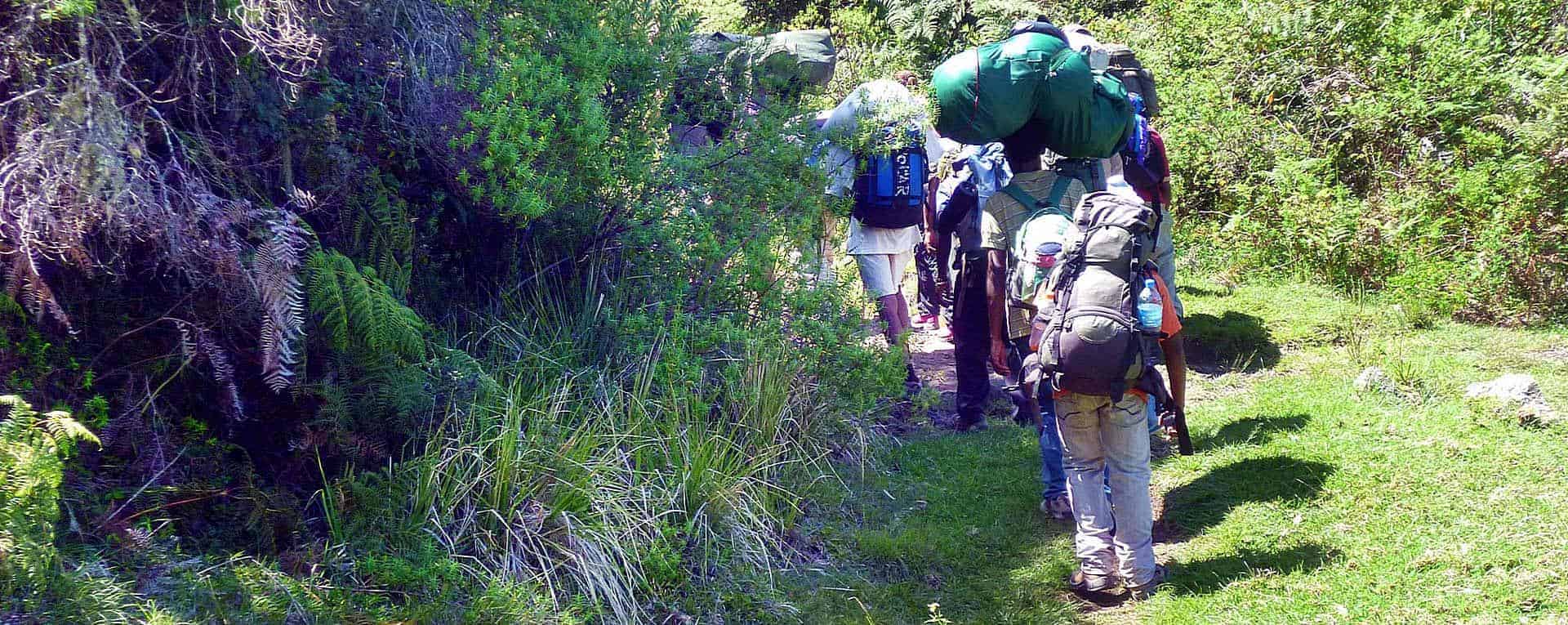
At the lower slopes and Momella Gate, daytime temperatures range between 18°C and 26°C, with mild evenings. Moving higher to Miriakamba Hut (2,514 m) and Saddle Hut (3,570 m), temperatures become cooler, especially at night, often dropping below 10°C.
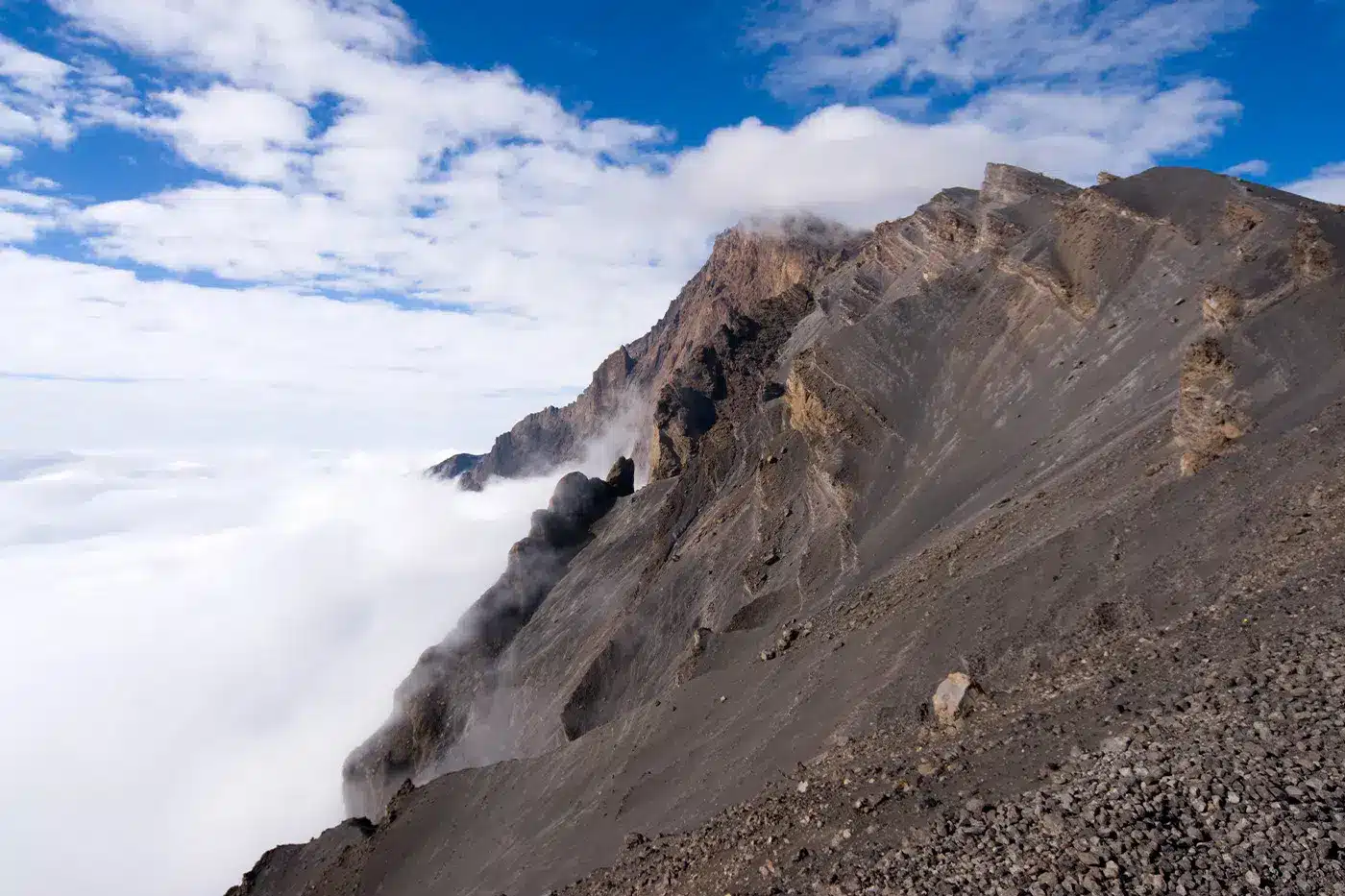
At the summit, Socialist Peak, temperatures can fall below 0°C, particularly during early morning summit attempts. Wind chill can make conditions feel much colder, emphasizing the need for proper cold-weather gear.
Best Time to Climb Mount Meru Based on Weather
Dry Seasons (Best Weather Conditions)
The best time to climb Mount Meru is during Tanzania’s dry seasons:
- January to February
- June to October
During these months, rainfall is minimal, trails are in good condition, and visibility is excellent. These periods offer the most stable weather conditions and are ideal for both first-time climbers and experienced trekkers.
Rainy Seasons (Challenging Weather Conditions)
Mount Meru experiences two rainy seasons:
- Long rains: March to May
- Short rains: November to early December
During these months, trails can become muddy and slippery, and clouds may limit views. However, the mountain is less crowded, and the landscape becomes lush and green. Climbers attempting Mount Meru during the rainy season should be well-prepared and flexible.
Monthly Weather Breakdown for Mount Meru
January–February: Warm days, cooler nights, minimal rain. Excellent climbing conditions.
March–May: Heaviest rainfall, reduced visibility, fewer climbers.
June–August: Cooler temperatures, dry weather, clear views. Cold nights at higher altitudes.
September–October: Mild temperatures, stable conditions, excellent trekking weather.
November–December: Short rains with intermittent showers; still climbable with preparation.
Wind and Visibility on Mount Meru
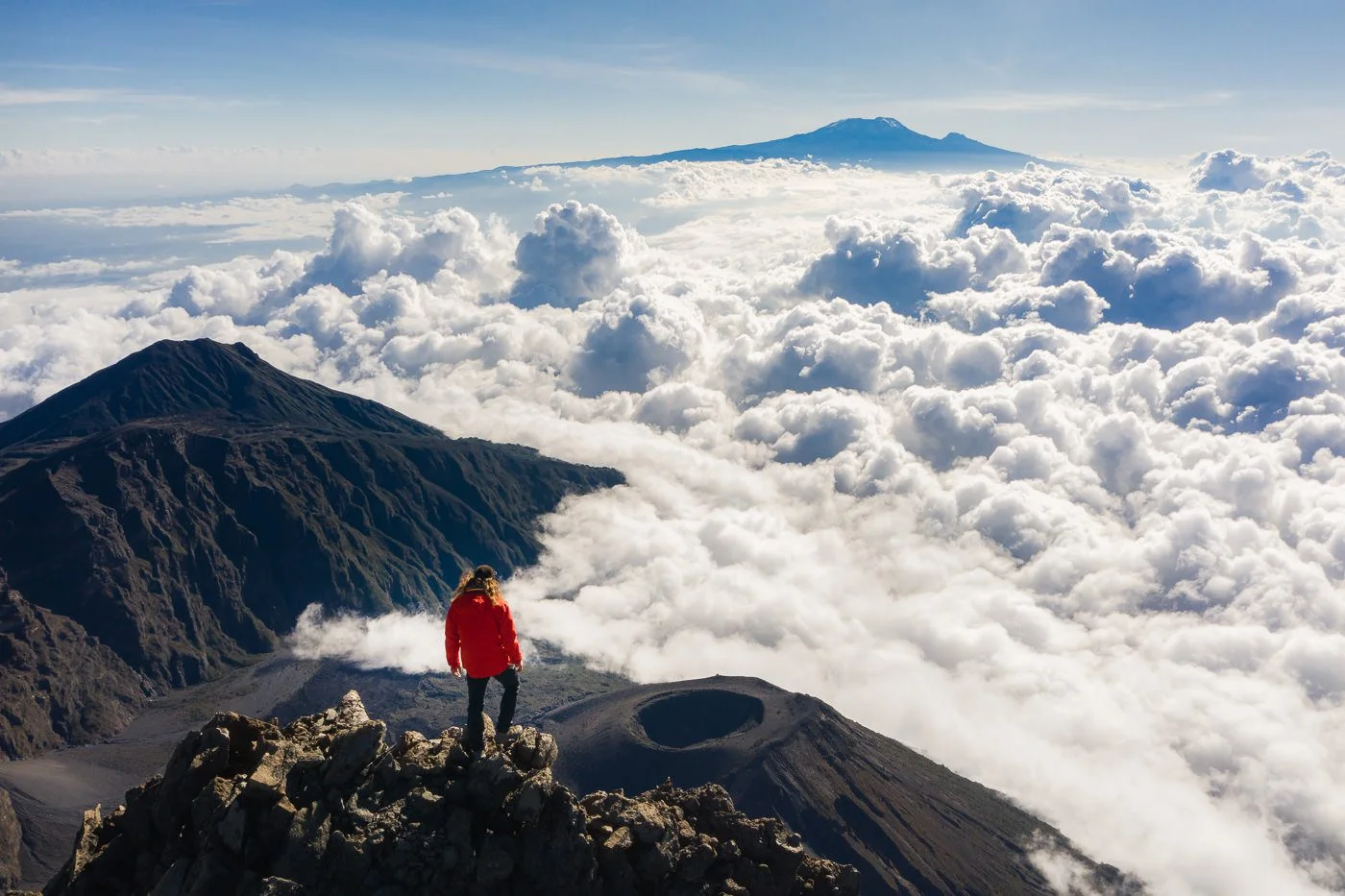
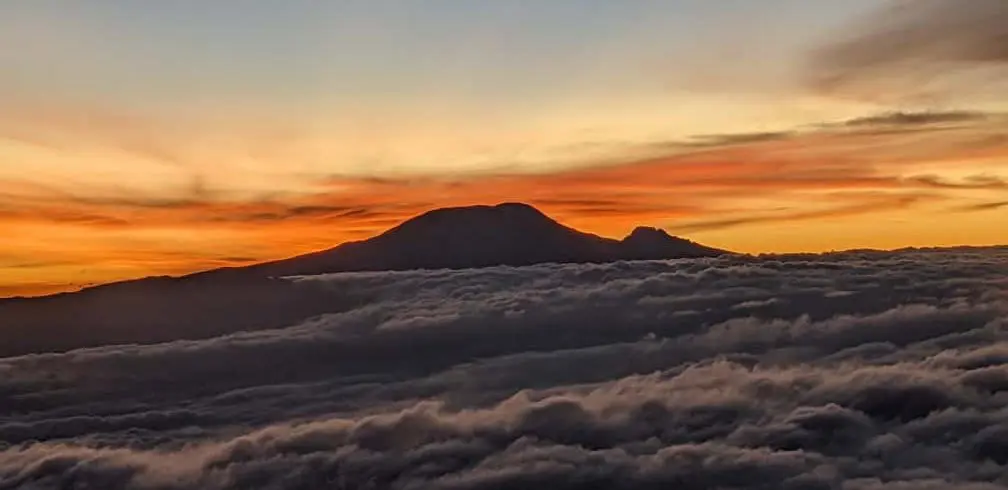
Wind increases significantly above Saddle Hut, especially during early morning summit attempts. Clear weather offers breathtaking views of Mount Kilimanjaro, Ngorongoro Highlands, and the Great Rift Valley.
Cloud cover often builds in the afternoon, making early starts essential for the best visibility and safest conditions.
How Weather Affects Mount Meru Trekking Experience
Weather conditions directly influence trail safety, comfort, and enjoyment. Dry conditions allow easier walking and better wildlife viewing in Arusha National Park, while cold summit temperatures require proper layering.
Oserok Trips schedules climbs strategically to avoid severe weather and ensures daily briefings to adapt to changing conditions.
What to Pack for Mount Meru Weather Conditions
Packing correctly is crucial due to Mount Meru’s varied climate. Essential items include:
- Lightweight clothing for lower elevations
- Insulated jackets and thermal layers for summit night
- Waterproof rain gear
- Warm gloves, hats, and socks
- Sturdy, waterproof hiking boots
Oserok Trips provides a detailed packing checklist to ensure climbers are fully prepared for Mount Meru weather conditions.
Why Understanding Mount Meru Weather Matters
Proper knowledge of Mount Meru’s weather helps climbers:
- Choose the best climbing season
- Pack appropriately for temperature changes
- Reduce risks related to cold, rain, and wind
- Increase comfort and overall summit success
At Oserok Trips, we prioritize safety and preparation, ensuring our climbers are ready for every weather scenario.
Final Thoughts: Is Mount Meru Weather Manageable?
Yes—with the right timing, preparation, and guidance. While Mount Meru weather conditions vary by season and altitude, most climbers find the mountain highly rewarding and manageable when climbed during favorable months.
With expert planning and experienced guides from Oserok Trips, Mount Meru offers a memorable trekking adventure with stunning scenery and excellent acclimatization benefits.
Ready to climb Mount Meru? Let Oserok Trips help you choose the best season and prepare for every weather condition.


